Why Media Placement Matters More Than Creative Alone?
Published by Assured Advertising | 7 August 2026 | Blog
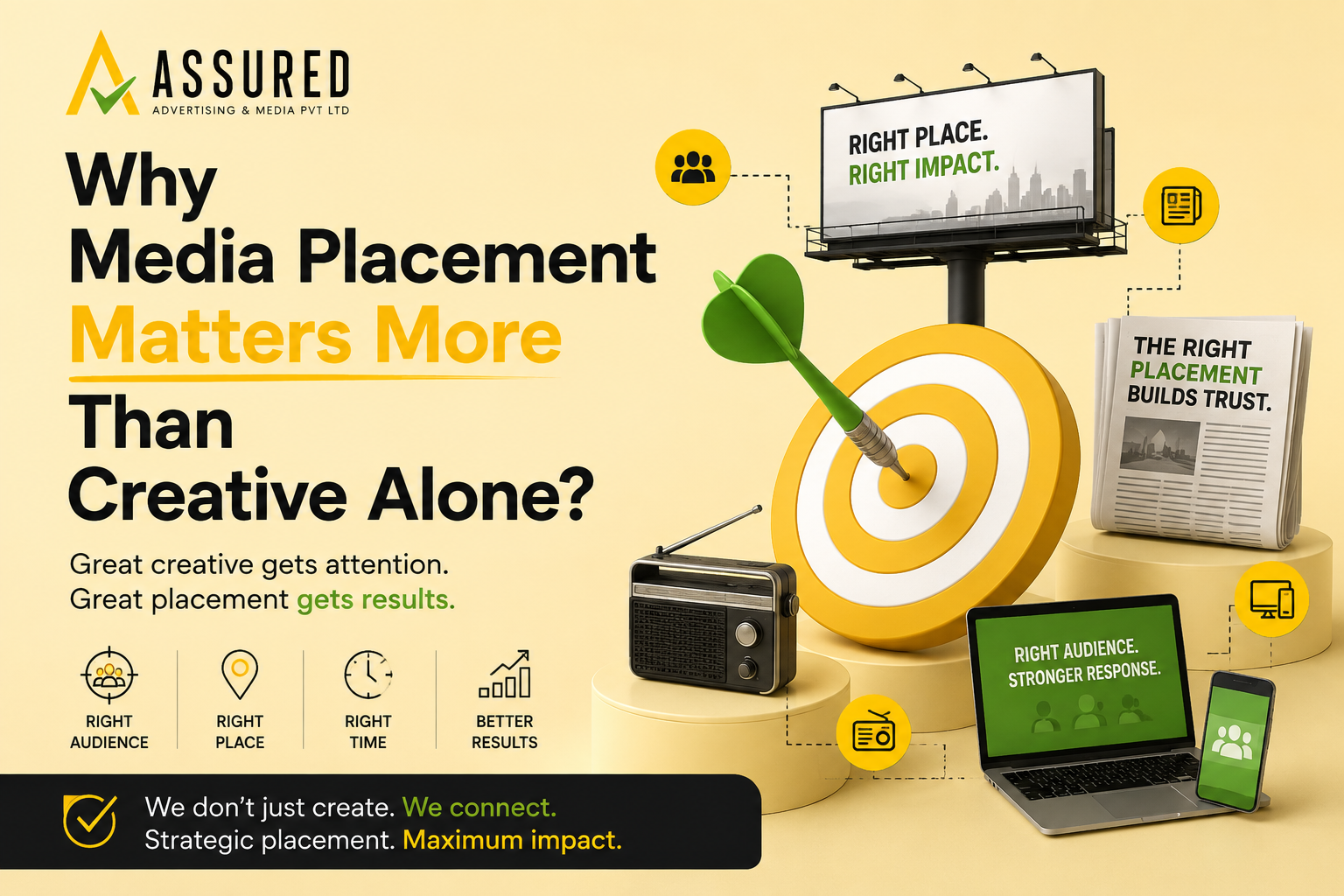
Businesses often believe that a great advertisement is all it takes to run a successful campaign. While creative is important, it is only one part of the equation. Even the most memorable advertisement can fail if it reaches the wrong audience, appears in the wrong medium or is delivered at the wrong time.
This is where media planning becomes the deciding factor. The success of an advertisement depends not only on what it says, but also on where, when and to whom it is delivered.
The placement changes the meaning of the message. A strong creative deserves a strong media strategy.
Great Creative Cannot Fix Poor Placement
Imagine a luxury real estate advertisement placed in a publication that its target audience never reads. Now compare it with a simple but well-placed advertisement in a premium business newspaper read by prospective buyers.
The second campaign is far more likely to succeed because it reaches qualified buyers in an environment they already trust.
Likewise, an average billboard at a high-traffic junction often outperforms an exceptional creative displayed where the intended audience never looks. Creative captures attention, but placement determines whether that attention comes from the people who matter.
This is why successful advertising strategy begins long before an advertisement is designed. It starts with understanding the audience, identifying the right media channels, analysing market behaviour and selecting environments where the brand will naturally earn attention and trust.
Creative starts conversations. Placement decides who joins them.
Media Planning Gives Creative a Purpose
Every advertising campaign should answer one simple question: who needs to see this message?
That is the foundation of effective media planning.
It involves understanding audience behaviour, geography, campaign objectives and media consumption habits before deciding where advertisements should appear.
For example, a regional education institution may benefit from newspaper advertising in specific cities, while a healthcare brand may require a combination of print and radio to build trust. A retail business launching a seasonal sale may achieve stronger results through outdoor media in high-footfall locations rather than a nationwide campaign.
The objective is not maximum exposure. It is meaningful exposure.
When media planning is strategic, every placement supports the campaign objective instead of simply adding impressions.
Media Buying Turns Strategy into Results
Once the strategy is defined, media buying brings it to life.
Media buying is far more than purchasing advertising space. It involves selecting the right publications, negotiating premium placements, identifying high-impact locations, optimising campaign timing and frequency and ensuring every investment contributes to business objectives.
The difference is rarely how much a brand spends. It is how intelligently that investment is distributed across the right media.
A cheap placement can become expensive if it reaches the wrong audience. A strategic placement, delivered at the right time and with the right frequency, often produces greater long-term value than a larger but poorly planned campaign.
Traditional and Digital Work Better Together
Many businesses treat traditional media and digital marketing as competing choices. In reality, they perform different roles within the same customer journey.
A thoughtfully executed print advertising campaign places a brand inside a trusted editorial environment, strengthening credibility before customers begin researching online.
Similarly, radio advertising builds familiarity through repeated exposure during daily routines, making the brand easier to recognise when customers later encounter it on digital platforms.
When traditional media has already built trust and recall, digital marketing becomes significantly more effective. Prospective customers are more likely to click, search, enquire or convert because the brand already feels familiar.
The strongest campaigns recognise that neither channel replaces the other. Traditional media builds confidence. Digital marketing captures intent and converts that confidence into measurable business outcomes.
Campaign Planning Connects Every Touchpointe
Successful campaign planning is about sequencing channels so that each one strengthens the next.
A new residential project, for example, may first use print advertising to establish credibility, followed by radio advertising to reinforce recall during daily commutes. Once awareness and trust have been built, digital marketing campaigns can capture search intent, drive enquiries and convert interested prospects.
Each medium performs a different job, but together they create a consistent customer journey.
Businesses that focus only on creative often overlook this advantage. They invest in designing better advertisements while ignoring the environments in which those advertisements will appear.
The result is a campaign that looks impressive but delivers inconsistent outcomes.
Conclusion
Creative may capture attention, but placement determines whether that attention becomes awareness, trust and ultimately, business growth.
The strongest campaigns understand that great creative amplifies the right placement, but even exceptional creative cannot compensate for poor placement.
The most successful campaigns are built on intelligent media planning, disciplined media buying, thoughtful campaign planning and an advertising strategy that delivers the right message through the right medium at the right moment.
For Assured Advertising, visibility is never the final objective. Credible visibility is. Because when the right message appears in the right place, it does more than get noticedâ€â€it earns trust, strengthens perception and creates lasting business value
FAQs
1. Why is media planning important in advertising?
Media planning ensures advertisements reach the right audience through the most effective channels, improving campaign performance while reducing wasted spending.
2. What is the difference between media planning and media buying?
Media planning focuses on audience strategy, channel selection and campaign objectives, while media buying secures the best placements, negotiates rates and executes the media plan.
3. Is print advertising still effective?
Yes. Print advertising remains highly effective for brands that want to build credibility, trust and strong regional or local visibility, especially when integrated with digital campaigns.
4. How does campaign planning improve advertising results?
Effective campaign planning sequences different media channels to guide audiences from awareness to trust and finally to action, resulting in stronger recall and better business outcomes.