Why People Remember Billboards They Didn’t Look At?
Published by Assured Advertising | 20 May 2026 | Blog
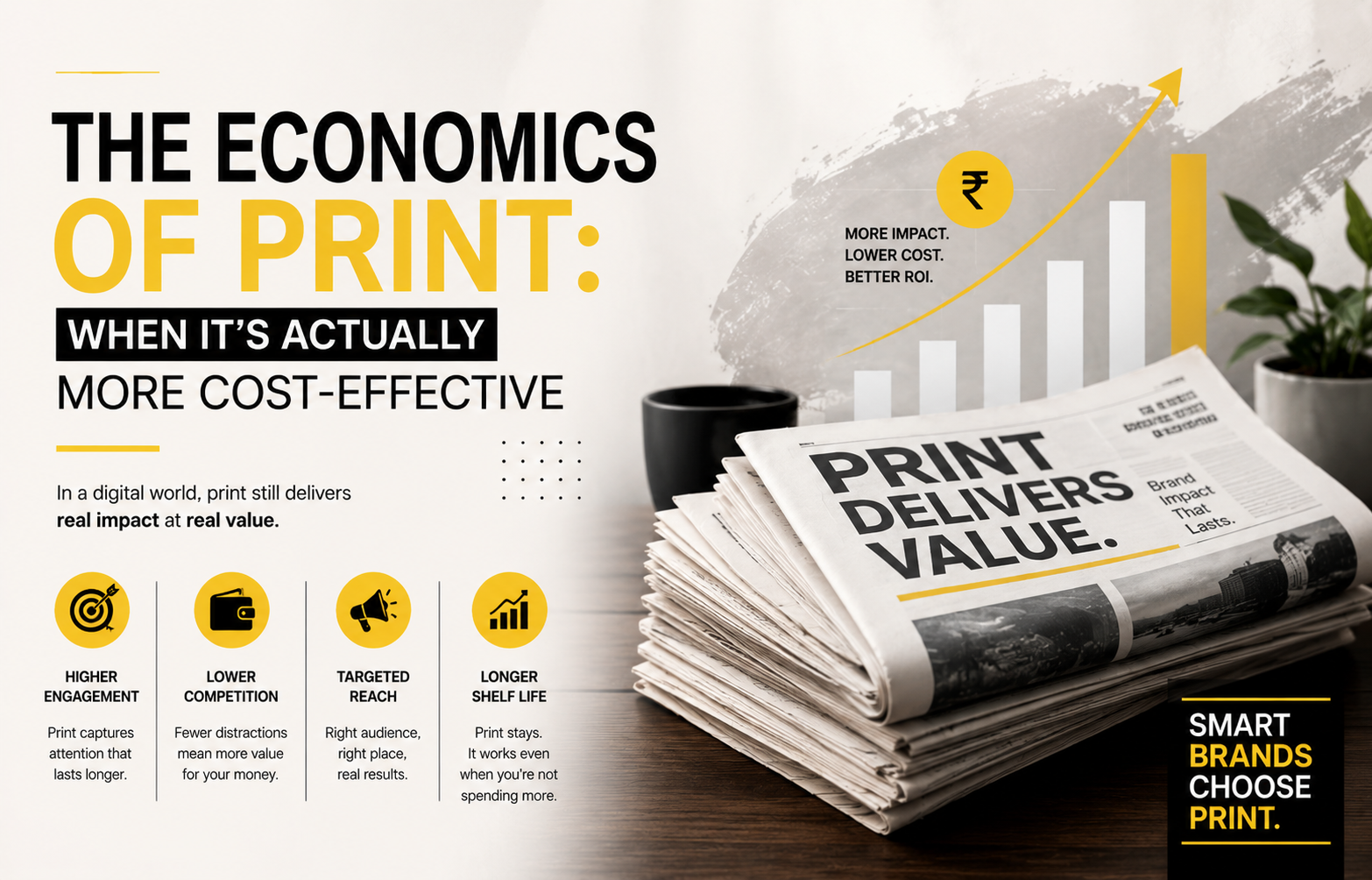
For years, brands have been told that digital is always cheaper, faster and more efficient. A click looks cheaper than a newspaper ad. A social impression looks lighter on the budget than a magazine placement. A dashboard feels more precise than a print insertion.
But cost-effectiveness is not about what looks cheaper upfront. It is about what creates stronger business impact for the money spent.
That is where print advertising still holds serious value. Print becomes cost-effective when the goal is not just reach, but trust, seriousness, local authority and high-quality recall. In categories where credibility influences the final decision, print is not an old media format. It is an economic tool for building confidence.
Cheap Reach Is Not the Same as Valuable Attention
Many brands compare media by cost per impression. On that metric, digital often looks unbeatable. But the real question is: did the impression matter?
A user may scroll past an ad without absorbing it. A banner may technically load but never register. A video ad may be skipped before the message lands. Cheap attention can become expensive if people ignore it.
This is where print media advertising changes the equation.
A newspaper or magazine creates a more focused environment. The reader is not swiping through endless distractions. The brand appears inside a medium already associated with information, credibility and public seriousness. That context matters.
A full-page newspaper ad may cost more than a digital campaign, but it can create a stronger trust signal. For real estate, education, healthcare, finance, jewellery, retail, public announcements and local-market launches, that trust can directly influence enquiries, footfall and decision confidence.
When Print Advertising ROI Becomes Stronger
The mistake is to measure print advertising ROI only through immediate calls, QR scans or coupon codes. Those matter, but they are not the whole picture.
Print often works earlier in the decision journey. It shapes perception before the customer takes action.
A real estate buyer may see a project in the newspaper, then notice the same brand on a hoarding, speak to a broker and finally search online. The lead may get credited to digital, but the confidence may have started with print. A parent choosing an educational institute may trust a newspaper ad during admission season more than a random online post. A jewellery brand during festive months may use print to create prestige, not just promotion.
In these cases, print is not only a lead-generation channel. It is a trust multiplier.
The cost of print becomes easier to justify when it improves enquiry quality, strengthens brand recall, supports sales teams and makes the brand feel established before the first conversation begins.
Print is Efficient When the Media Plan is Precise
Print is not automatically cost-effective. It becomes cost-effective when planned intelligently. This is where a strong print advertising agency matters. The decision is not simply “Which newspaper should we advertise in?” The better questions are:
“Who needs to believe this message?”
“Which city, edition or region matters most?”
Is the goal awareness, urgency, prestige, recruitment, footfall or credibility? Should the brand use a jacket ad, full-page ad, half-page ad, insert, supplement or classified format?
Different formats serve different business needs.
Newspaper advertising works well when brands need reach, public credibility and timely visibility. Magazine advertising works better when the goal is premium perception, category authority or a longer shelf life. Regional newspapers can help brands dominate specific markets without wasting budget on audiences that do not matter.
Traditional Advertising Can Reduce the Cost of Being Ignored
The real cost in advertising is not always media spends. Sometimes, the bigger cost is being unnoticed, untrusted or easily forgotten.
This is where traditional advertising still has power.
A brand in print feels more public. It signals scale. It shows commitment. It gives customers, dealers, investors, partners and local markets a reason to take the brand seriously. That kind of perception is difficult to build through scattered digital impressions alone.
Print also has a longer life than many digital ads. A newspaper may stay on a table through the day. A magazine may remain in homes, offices, lounges, clinics or waiting rooms for weeks. A well-designed print ad can be revisited, discussed and shared physically.
That extended presence adds value beyond the first exposure. Print is cost-effective when the cost of being trusted is lower than the cost of being ignored.
Print Works Harder Inside a Multi-Channel Campaign
Print does not need to compete with digital, outdoor, radio or television. It often performs best when it anchors them.
A newspaper ad can create credibility in the morning. A billboard can reinforce public visibility through the day. Radio can build frequency. Digital can capture intent. Together, the campaign becomes easier to remember and harder to dismiss.
This is especially useful for brands entering new markets, launching projects, announcing offers or building category authority. Print gives the campaign weight. Other channels extend the message. When a customer sees the same brand across print, outdoor and digital, the brand stops feeling random. It starts feeling present.
The Real Cost Question
The smarter question is not, “Is print cheaper than digital?” The better question is: What does the brand need for the medium to achieve?
If the goal is only quick clicks, print may not be the first choice. But if the goal is credibility, regional trust, public visibility, premium perception and stronger recall, print advertising can deliver value far beyond its upfront cost.
At Assured Advertising, print is not treated as a routine media placement. It is treated as a strategic visibility decision. With expertise across newspaper advertising, magazine advertising, outdoor, radio, television and integrated media planning, Assured Advertising helps brands use print where it delivers the strongest commercial and perception value.
Conclusion
Print becomes cost-effective when it is planned with clarity. The right publication, format, market, timing and message can turn traditional advertising into a high-trust investment. In a market full of fleeting impressions, print still offers something valuable: attention with credibility, visibility with weight and presence that influences decisions before the enquiry happens.