Conquer Urban Mayhem: Electrifying Media Buying Strategies Unleashed
Published by Assured Advertising | 8 June 2026 | Blog
Most brands do not waste money because they advertise. They waste money because they buy media before knowing what the placement is supposed to achieve.
That is the real difference between media buying and media strategy.
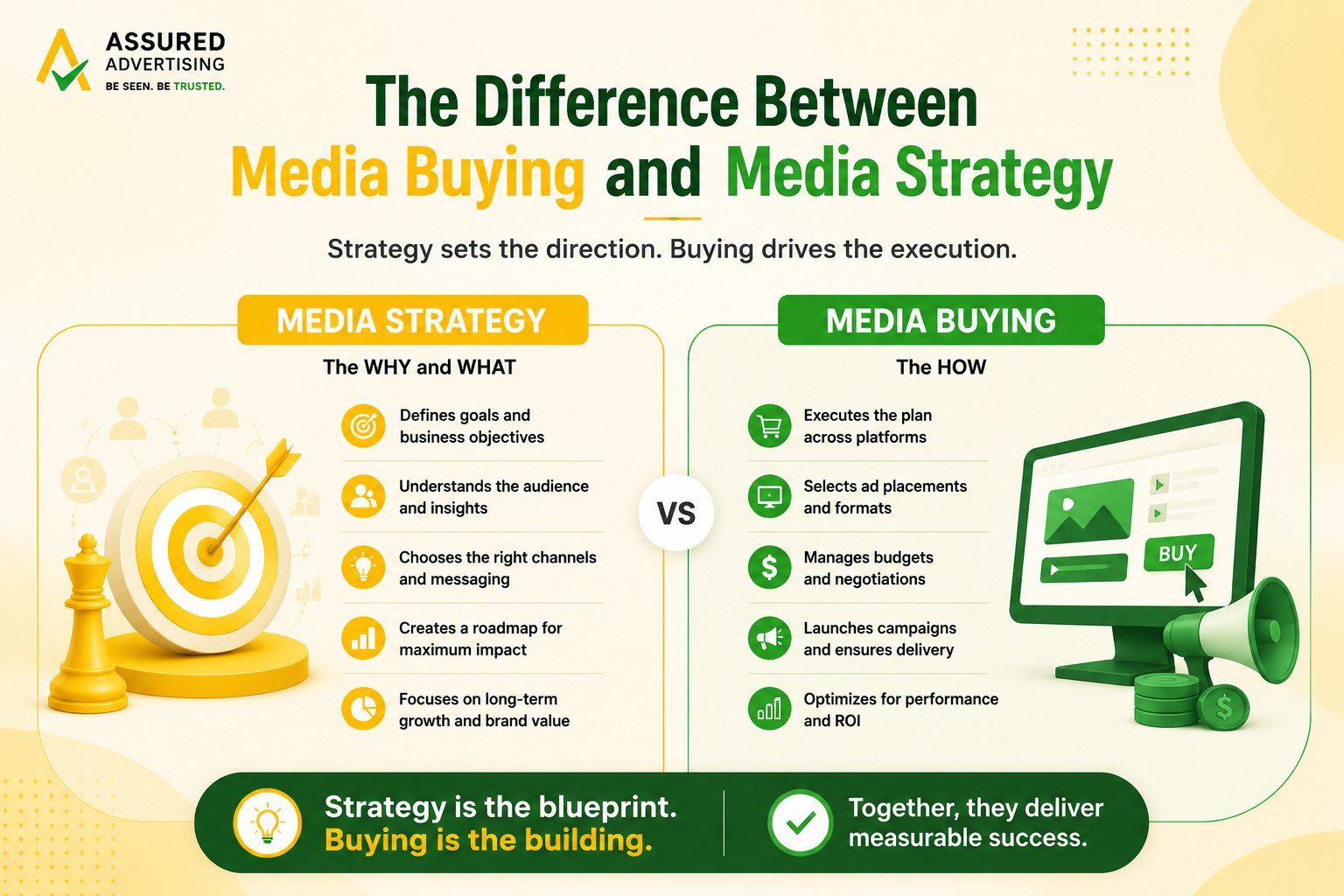
Media buying secures advertising space. It covers rates, negotiations, formats, schedules, placements and execution. Media strategy decides why that space is needed. It defines the audience, objective, geography, message, channel mix and role of each placement.
One gets the ad placed. The other ensures the placement has a purpose.
For brands, this difference matters because advertising is not only about appearing somewhere. It is about appearing in the right environment, in front of the right audience, with the right level of credibility.
Media Buying is Execution. Strategy is Direction.
A brand can buy a newspaper ad, billboard, radio slot, magazine placement or television spot. But buying space does not automatically make the campaign effective.
A front-page newspaper ad may build authority for one brand and waste money for another. A hoarding at a busy junction may create recall for a retail launch but do little for a niche B2B service. A radio campaign may support local familiarity but may not be enough for a premium real estate project that needs buyer confidence.
This is where strategy becomes essential. A strong campaign asks the difficult questions before money is spent. Who are we trying to influence? What do we want them to believe? Is the objective trust, urgency, enquiries, footfall, awareness or prestige? Which medium carries the right credibility? How should print, OOH, radio, television and digital support one another?
Without this thinking, buying becomes a transaction. With it, media becomes a business tool.
The Cost of Buying Space Without a Strategy
A cheap placement is expensive if it reaches the wrong audience, appears in the wrong context or fails to build credibility.
Brands often choose media before defining the objective. They book inventory because it is familiar, available or discounted. The campaign may become visible, but not valuable.
Poor strategy does not only waste media spend. It can weaken recall, reduce enquiry quality and make a serious brand look misplaced.
A school may need parent-focused newspaper visibility and local outdoor presence during admission season. A jewellery brand may need premium print and high-street OOH ads during festive periods. A real estate launch may require credible newspaper advertising, strategic hoardings near buyer catchments and digital support to capture intent.
The medium should follow the market goal, not the other way around.
This is why a strong media buying agency should not simply ask where the brand wants to advertise. It should ask what the advertising needs to achieve.
Media Planning and Buying Must Work Together
The best campaigns do not treat planning and buying as separate worlds. Strong media planning and buying connects strategic thinking with market execution.
Planning decides the role of each medium. Buying secures the right formats, placements, timings and rates. One defines the commercial logic. The other brings that logic alive.
Print may establish credibility. Outdoor may build repeated public visibility. Radio may create local familiarity. Television may add scale. Digital may capture intent and enquiries.
When these channels work together, they stop behaving like scattered placements. They become a connected visibility system.
A capable media buying agency understands that strong media planning and buying is not about filling spaces. It is about choosing placements that support the brand’s larger market objective.
That is the difference between buying inventory and building influence.
Every Medium Should Have a Clear Role
Good media strategy does not choose channels because they are popular. It chooses them because each channel has a specific job.
Newspaper advertising can build seriousness, credibility and public trust. Magazine advertising can support premium perception and a longer shelf life. OOH advertising can create physical presence and daily recall. Radio can build frequency and local familiarity. Television can add scale and legitimacy.
A campaign without strategy may use all these formats and still feel noisy. A campaign with strategy uses each one with intent.
The goal is not simply to spend across multiple channels. The goal is to create the right perception in the right market.
Turning Media Space into Market Presence
For Assured Advertising, the value of a media plan is not only in where the ad appears, but in what placement does it help the brand become successful.
A newspaper ad can make a brand feel credible. A billboard can make it feel present. A radio campaign can make it feel familiar. A television spot can make it feel larger. A magazine placement can make it feel premium.
Media should therefore never be treated as empty space to be filled. It is a strategic environment where perception is shaped.
With expertise across print, OOH, radio, television and integrated campaigns, Assured Advertising connects strategy with execution so that every placement serves a larger business purpose.
The goal is not simply to advertise. The goal is to build credible visibility in the markets that matter.
Conclusion
The difference between media buying and media strategy is the difference between placement and purpose. Buying secures the space. Strategy gives that space commercial meaning.
For brands that want more than scattered visibility, both are essential. Strategy defines the role of each medium. Buying turns that strategy into real-world presence. When planned well, the result is not just advertising. It is market presence with credibility, recall and intent behind it.